

How Smart Integrated Manufacturing Systems Are Transforming Industrial Production

For many manufacturers, the challenge is no longer simply producing goods faster. It is integrating machinery, software and operational processes into a coordinated system that can support business growth while controlling costs.
This shift is particularly evident in industries that rely on complex, multi-stage production processes. Sandwich panel manufacturing, for example, requires precise coordination between material preparation, adhesive application, assembly, pressing and quality control.
Modern production equipment demonstrates how businesses can move from isolated machinery and labour-intensive processes towards integrated manufacturing systems.
The implications extend beyond construction materials. The same technological principles are relevant to businesses manufacturing automotive components, industrial equipment, prefabricated buildings and specialist engineered products.
The Shift Towards Integrated Manufacturing Systems
Traditional manufacturing environments often rely on individual machines performing separate operations.
Although these machines may operate efficiently in isolation, the wider production process can suffer from delays, inconsistent workflows and limited visibility of operational performance.
Integrated manufacturing systems address these challenges by connecting equipment and coordinating activities across production stages.
Rather than treating each machine as an independent asset, manufacturers can design production lines in which equipment operates as part of a wider system.
This approach can involve programmable logic controllers (PLCs), industrial sensors, automated conveyors, robotic handling equipment and centralised production controls.
For businesses, the benefits can include improved process consistency, reduced manual intervention and more predictable production capacity.
However, integration is not simply a technical exercise. It requires manufacturers to understand how production processes interact and where operational bottlenecks occur.
A faster machine does not necessarily increase overall output if another stage of production cannot accommodate the additional capacity.
Successful automation therefore depends on optimising the complete manufacturing workflow.

How Industrial Automation Improves Business Operations
Automation is increasingly viewed as a strategic investment rather than merely a way to replace manual activities.
When implemented appropriately, it can influence several areas of business performance.
Improving Operational Efficiency
Automated production systems can reduce the time spent on repetitive tasks, material movement and manual equipment adjustments.
Programmable machinery allows manufacturers to establish repeatable operating parameters, helping maintain consistency between production cycles.
For example, automated adhesive application systems can control the distribution of bonding materials across manufactured components.
This can reduce variation in adhesive application and help businesses manage material consumption more accurately.
Similarly, automated handling systemscan transfer materials between workstations without requiring repeated manual movement.
These improvements can contribute to greater throughput, although the actual benefit depends on how effectively the entire production line is configured.
Reducing Manufacturing Costs
Manufacturing costs are influenced by labour, energy, materials, maintenance and production downtime.
Automation can help businesses manage some of these costs through more consistent processes and reduced material waste.
Precision cutting equipment, for example, can improve material utilisation by following predetermined cutting patterns.
Automated dispensing systems can help avoid excessive use of adhesives or other consumables.
Over time, these efficiencies may reduce the cost of producing individual units, particularly in higher-volume manufacturing environments.
However, businesses must also consider the capital cost of equipment, installation, operator training and ongoing maintenance.
The financial case for automation should therefore be based on total cost of ownership rather than machinery purchase price alone.
Supporting Business Scalability
For growing manufacturers, increasing production capacity often requires additional equipment, employees and factory space.
Integrated production systems can provide a more structured approach to expansion.
Some manufacturing lines are designed around modular equipment configurations, allowing additional processing stations or automated handling systems to be introduced as demand increases.
This can enable businesses to expand capacity without redesigning their entire production operation.
Scalability also depends on production planning, supplier reliability and the availability of appropriately trained employees.
Automation supports growth most effectively when machinery investment is aligned with wider operational and commercial planning.
Table 1. Traditional manufacturing vs integrated manufacturing systems
| Capability | Traditional approach | Integrated systems |
| Production control | Independent machines | Coordinated processes |
| Monitoring | Manual reporting | Automated data capture |
| Quality assurance | Periodic inspection | In-process monitoring |
| Maintenance | Reactive or scheduled | Condition-based where supported |
| Business integration | Disconnected records | ERP/MES connectivity |
| Scalability | Additional manual capacity | Modular automation |
Connected Machinery and the Role of Industrial Data
One of the most important developments in manufacturing technology is the increasing ability of industrial equipment to generate and exchange operational data.
Modern production environments may use sensors, PLCs, human-machine interfaces and industrial communication networks to monitor equipment performance.
These technologies form part of the broader Industrial Internet of Things (IIoT).
When connected to appropriate monitoring platforms, manufacturing equipment can provide information about machine utilisation, operating conditions, cycle times and production interruptions.
For management teams, this creates opportunities to make decisions using operational evidence rather than relying entirely on manual reporting.
Production Monitoring and Performance Management
Manufacturers can use production data to identify where time or resources are being lost.
For example, monitoring cycle times across different manufacturing stages can reveal whether one operation is consistently delaying the wider production line.
Businesses can then investigate the cause and determine whether the solution requires equipment changes, process adjustments or additional capacity.
Operational measures such as overall equipment effectiveness (OEE) can help organisations evaluate availability, performance and quality.
However, meaningful performance measurement requires reliable data collection and consistent definitions.
Connecting machines to a network does not automatically create an effective manufacturing intelligence system.
Predictive Maintenance and Equipment Availability
Unexpected machinery failures can disrupt production schedules and create additional operating costs.
Condition-monitoring technologies can help manufacturers detect changes in equipment behaviour that may indicate developing problems.
Depending on the equipment, relevant information might include vibration, temperature, pressure, electrical consumption or operating cycles.
More advanced systems can analyse these measurements to support predictive maintenance.
This approach differs from conventional scheduled maintenance because it uses equipment condition and operating patterns to inform maintenance decisions.
Not every manufacturer requires sophisticated predictive analytics, but even basic equipment monitoring can improve visibility of recurring faults and downtime.
A Practical Example: Technology in Sandwich Panel Manufacturing
The application of integrated manufacturing technology can be seen in sandwich panel production.
Sandwich panels are composite components typically constructed from two outer facing materials bonded to an internal core.
They are used across several industries, including prefabricated housing, mobile homes, recreational vehicles, refrigerated transport and industrial construction.
Manufacturing these panels requires coordination between several processes, including material preparation, adhesive application, assembly, pressing and finishing.
Traditionally, these operations may involve separate machines and significant manual handling.
Integrated production systems bring multiple stages together, helping manufacturers coordinate machinery and reduce unnecessary movement between workstations.
Gluestream and Integrated Production Equipment
Gluestream provides an example of how specialist machinery manufacturers are applying automation to these processes.
The company develops equipment for structural insulated panels (SIPs), GRP/FRP composite panels and other industrial panel applications.
Its manufacturing solutions include automated adhesive application equipment, pressing systems, material-handling machinery and integrated production lines.
For businesses looking to introduce or expand automated composite panel manufacturing, a specialist sandwich panel machine supplier such as Gluestream can provide equipment designed to coordinate multiple production stages within a manufacturing workflow.
The company has an international customer footprint across more than ten countries, reflecting the demand for specialised manufacturing equipment in different industrial markets.
From a business technology perspective, the significance lies in the integration of equipment rather than the panels themselves.
Automated adhesive application systems can regulate material distribution, while programmable pressing equipment supports repeatable production conditions.
Conveyors and material-handling systems can coordinate movement between manufacturing stages.
Some equipment configurations also support remote technical access, enabling diagnostics and troubleshooting without requiring every intervention to take place on-site.
These capabilities demonstrate how established automation technologies can be applied to specialised industrial processes.
Importantly, the presence of programmable machinery or remote diagnostics should not be confused with a fully connected smart factory. More advanced capabilities, such as enterprise-wide production analytics or predictive maintenance, generally require additional software, instrumentation and systems integration.
Connecting Factory Equipment With Business Systems
Industrial automation delivers its greatest strategic value when manufacturing operations are aligned with wider business processes.
Many businesses already rely on enterprise resource planning (ERP) platforms to manage purchasing, inventory, finance and customer orders.
Manufacturing execution systems (MES) provide a further layer of operational control by helping organisations manage and monitor production activities.
When appropriately integrated, these systems can improve coordination between commercial demand and factory operations.
For example, a customer order recorded in an ERP platform may generate production requirements that are scheduled through manufacturing software.
Production data can then support material consumption records, order progress updates and inventory management.
This creates opportunities to improve operational visibility across departments.
ERP and Manufacturing Integration
Connecting manufacturing operations with ERP systems can help businesses align purchasing, inventory and production planning.
This is particularly useful where manufacturers produce multiple product configurations or operate with variable customer demand.
Accurate information about production schedules and material requirements can help procurement teams plan purchasing more effectively.
It can also reduce the reliance on disconnected spreadsheets and manual data transfers.
Manufacturing Execution Systems
MES platforms provide a link between business-level planning and activities taking place on the factory floor.
Depending on the implementation, an MES may support production scheduling, work instructions, material traceability, quality records and operational reporting.
For manufacturers using automated equipment, MES integration can improve visibility of work in progress and help identify production exceptions.
However, successful integration depends on compatible equipment interfaces, reliable data and clearly defined operational processes.
Digital Traceability and Quality Management
Traceability is important in industries where product quality, material specifications and manufacturing conditions must be documented.
Digital systems can help businesses associate production records with individual batches or products.
For composite panel manufacturers, relevant information might include material batches, adhesive specifications, production settings and inspection results.
These records can support quality investigations, customer assurance and applicable compliance requirements.
The value of digital traceability extends beyond manufacturing efficiency because it also strengthens operational governance and accountability.
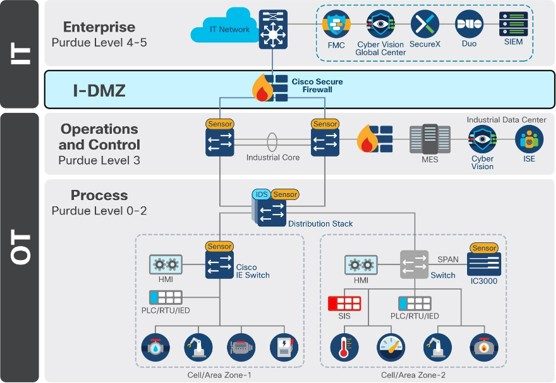
Cybersecurity Considerations for Connected Manufacturing
As industrial machinery becomes increasingly connected, cybersecurity becomes an important business risk.
Equipment that supports remote diagnostics or communicates with enterprise systems may introduce additional access points into the manufacturing environment.
Poorly controlled connections can expose production systems to unauthorised access, malware or operational disruption.
Manufacturers should therefore consider cybersecurity during equipment selection and systems integration.
Appropriate measures include network segmentation, controlled remote access, strong authentication, software maintenance and secure backup procedures.
Operational technology environments also require careful change management because interruptions to industrial control systems can have physical and financial consequences.
For businesses investing in connected machinery, cybersecurity should form part of the overall technology architecture rather than being treated as an afterthought.
Evaluating the Return on Investment in Manufacturing Technology
Investment in industrial automation should be supported by a clear business case.
While equipment suppliers may provide indicative production capacities, actual financial returns depend on operating conditions and how effectively the technology is implemented.
Businesses should assess both measurable financial benefits and wider operational improvements.
Table 2. Business technology investment priorities
| Technology | Business benefit | Suggested KPI |
| Industrial automation | Production efficiency | Units per labour hour |
| IIoT monitoring | Operational visibility | Equipment availability |
| ERP/MES integration | Process coordination | Production schedule adherence |
| Predictive maintenance | Reduced unplanned downtime | Unplanned downtime hours |
| Automated quality control | Consistent output | First-pass yield |
| Energy monitoring | Resource efficiency | kWh per unit produced |
Manufacturers should also evaluate implementation risks, including commissioning delays, equipment compatibility, training requirements and dependence on specialist technical support.
A phased implementation may be appropriate where businesses want to validate operational improvements before committing to a larger automation programme.
The objective should be to establish measurable improvements in production performance rather than assuming that additional technology will automatically generate commercial benefits.
The Future of Smart Manufacturing Systems
Manufacturing technology continues to evolve as automation, industrial connectivity and data analytics become more accessible.
Several developments are likely to influence future investment decisions.
Artificial intelligence and advanced analytics may enable manufacturers to identify more complex production patterns, improve quality inspection and optimise equipment maintenance.
Digital twins can provide virtual representations of equipment or production processes, allowing businesses to model changes and evaluate performance under different conditions.
Robotics and automated material handling may reduce the manual movement of large components and support more flexible manufacturing operations.
Interoperable industrial systems can make it easier to exchange information between machinery, manufacturing software and enterprise platforms.
Energy and resource monitoring can help businesses understand how production processes consume electricity, materials and other resources.
However, adopting these technologies requires more than purchasing new equipment.
Manufacturers need appropriate digital infrastructure, reliable operational data, technical expertise and clearly defined business objectives.
For many organisations, improving existing processes and connecting established systems will deliver greater immediate value than investing in advanced technologies without a clear operational requirement.
Frequently Asked Questions
What is an integrated manufacturing system?
An integrated manufacturing system connects equipment, controls and operational processes so that different production activities can work together. Depending on the implementation, it may also exchange information with manufacturing execution systems and enterprise software.
How does industrial automation improve business efficiency?
Industrial automation can improve efficiency by reducing repetitive manual tasks, supporting consistent production processes, improving material handling and providing greater control over manufacturing operations. Actual benefits depend on equipment configuration and the wider production workflow.
What is the difference between industrial automation and smart manufacturing?
Industrial automation focuses on using equipment and control systems to perform manufacturing tasks. Smart manufacturing extends this approach through connected systems, data collection, analytics and digital integration to support more informed operational decisions.
Can smaller manufacturing businesses benefit from automation?
Yes. Smaller manufacturers can benefit from targeted automation, including programmable equipment, automated dispensing systems and material-handling technology. The appropriate level of investment depends on production volume, operating costs and business requirements.
Conclusion
Industrial automation is changing how manufacturers approach productivity, quality and business growth.
The transition from standalone machinery to integrated manufacturing systems creates opportunities to improve process coordination, reduce manual intervention and develop more consistent production operations.
Applications such as sandwich panel manufacturing demonstrate how these technologies can be deployed in specialised industrial environments, where multiple production stages must operate together.
However, the wider business opportunity extends beyond individual production lines.
Connecting factory equipment with operational data, manufacturing software and enterprise systems can provide greater visibility across the business and support more effective decision-making.
For organisations planning technology investments, the priority should be to identify operational requirements, evaluate the commercial case and select systems that can support future development.
Ultimately, the value of smart manufacturing lies not simply in automation, but in creating connected, efficient and adaptable business operations.