

How Digital Manufacturing is Transforming Precision Machining and Metal Fabrication Solutions

On this page:
- Transforming Precision Machining and Metal Fabrication
- The Digital Manufacturing Revolution: Transforming Precision Machining for Competitive Advantage
- Precision Machining Reimagined: CNC and Multi-Axis Innovations
- Hybrid Manufacturing: Additive and Subtractive Methods
- Digital Twin and AI-Powered Quality Control
- Strategic Implementation Framework for Digital Manufacturing
Transforming Precision Machining and Metal Fabrication
Digital manufacturing is transforming precision machining and metal fabrication at an unprecedented pace, revolutionizing production, quality control, and operational efficiency. Many forward-thinking manufacturers – such as CT Products, a leading provider of Machine and Fabrication Shop Services – are demonstrating how modern digital tools enhance traditional craftsmanship. CT Products exemplifies the industry shift by delivering high-quality machine shop and fabrication services supported by advanced technologies, offering a wide range of metalworking and custom fabrication solutions that meet the exacting needs of today’s industrial buyers.
The global precision machining market, valued at USD 107.06 billion in 2023, is projected to reach USD 180.25 billion by 2030, growing at a 7.8% CAGR. This growth is fueled by technological advancements that boost productivity, quality, and competitiveness across critical industries.
Key Takeaways
- Digital manufacturing represents a fundamental reimagining of production processes, combining advanced technologies like AI, IoT, and multi-axis machining.
- Companies implementing comprehensive digital manufacturing frameworks can achieve up to 30% reduction in production time and 25% improvement in quality metrics.
- The successful transformation requires strategic alignment between technology, processes, and workforce development.
- Advanced technologies like CNC operations, AI-assisted programming, and smart metrology are driving significant improvements in precision and efficiency.
- Hybrid manufacturing approaches combining additive and subtractive methods are creating new possibilities for complex component design and production.
“Digital manufacturing is revolutionizing precision machining and metal fabrication, unlocking transformative opportunities for innovation and competitive edge. As exemplified by CT Products, strategic digital integration not only enhances production capabilities but also positions companies to thrive in a rapidly expanding $180.25 billion market.”
The Digital Manufacturing Revolution: Transforming Precision Machining for Competitive Advantage
Digital manufacturing is transforming precision machining and metal fabrication across industries, creating unprecedented opportunities for companies like CT Products. The global precision machining market is projected to reach $180.25 billion by 2030, growing at a CAGR of 7.8% from 2024 to 2030, signaling massive growth potential for early adopters.
Understanding the Digital Manufacturing Landscape
The shift toward digitalization in manufacturing represents more than just automation—it’s a fundamental reimagining of how precision parts are designed, produced, and validated. In scaled operations, companies implementing comprehensive digital manufacturing frameworks see up to 30% reduction in production time and 25% improvement in quality metrics.
The core components of this transformation include:
- Integrated production systems connecting design to execution
- Data-centric infrastructure supporting real-time decision making
- Process control systems beyond traditional statistical process control
- Traceability logs that document every manufacturing step
CT Products has positioned itself at the forefront of this transformation by integrating advanced digital tools that enhance precision while maintaining cost-effectiveness. Their approach addresses a commonly overlooked factor: the hidden dependency between digital system integration and actual shop floor execution. Simply implementing technology without re-engineering workflows often fails to deliver promised returns.
Key Technologies Driving Transformation
Several breakthrough technologies are accelerating the digital manufacturing revolution in precision machining:
- CNC Operation Advancement: CNC operations now account for 78.5% of global precision machining revenue, with CT Products utilizing digital transformation strategies to maximize their CNC capabilities.
- AI-Assisted Programming: Machine learning technologies now optimize toolpaths and cutting parameters automatically, reducing programming time by up to 40%.
- Smart Metrology: In-process quality checks using embedded sensors and vision systems verify dimensional accuracy in real-time.
- Digital Twins: Virtual replicas of physical manufacturing systems enable simulation and optimization before actual production begins.
- Hybrid machine platforms that combine additive and subtractive methods create new possibilities for complex geometries.
In enterprise deployments, the integration of these technologies creates a self-improving manufacturing ecosystem. CT Products leverages these innovations to deliver consistently superior results while maintaining competitive pricing.
What matters most here: The successful implementation of digital manufacturing isn’t just about technology acquisition—it requires strategic alignment between technology, processes, and people. Companies must consider their specific manufacturing challenges, product complexity, and volume requirements before determining their digital transformation roadmap.
The operational constraint rarely discussed is the significant data management burden these technologies create. Without proper systems to capture, analyze, and act on production data, the full benefits of digital manufacturing remain unrealized.
Precision Machining Reimagined: CNC and Multi-Axis Innovations
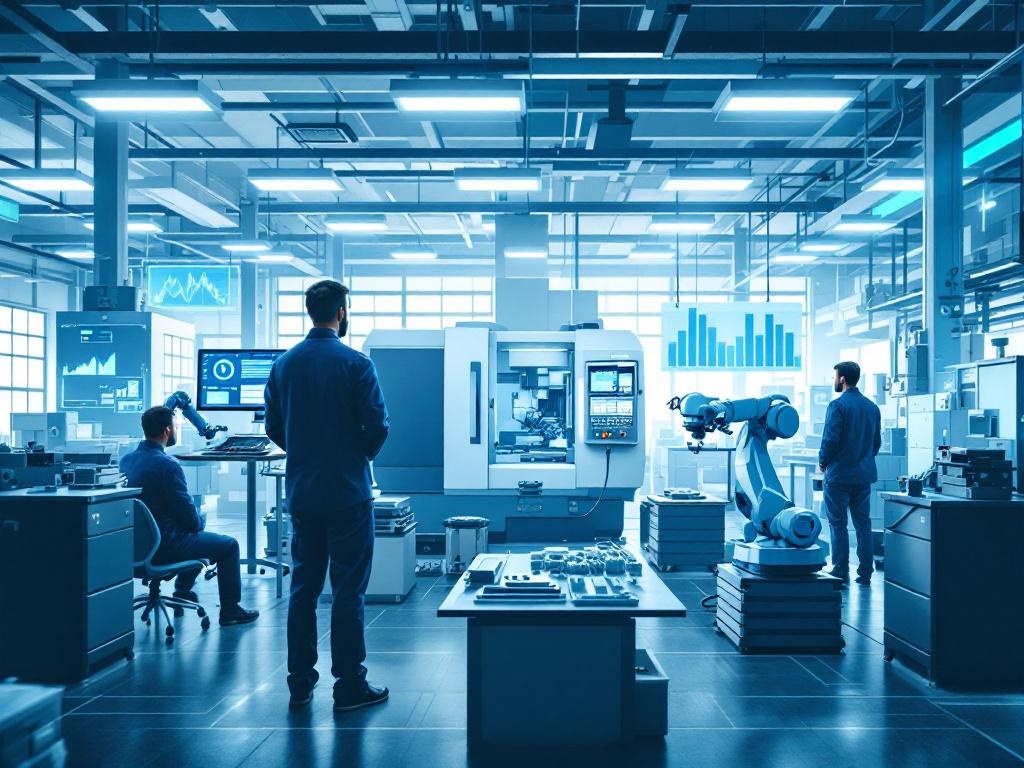
Digital manufacturing is transforming precision machining and metal fabrication through revolutionary advancements in CNC technology and multi-axis innovations. Leading providers like CT Products are leveraging these technologies to deliver exceptional machining services with unprecedented accuracy and efficiency. The precision machining market, currently valued at $107 billion, is projected to reach $180 billion by 2030 with a CAGR of 7.8%, driven largely by these technological innovations.
Advanced CNC Operation Strategies
CNC operations now dominate the precision machining landscape, accounting for 78.5% of global revenue. Modern CNC machines utilize sophisticated CAM systems that optimize toolpaths based on material properties and cutting conditions. You’ll gain significant advantages by implementing:
- Adaptive machining techniques that adjust cutting parameters in real-time
- High-speed machining strategies that reduce cycle times by up to 40%
- Toolpath optimization algorithms that minimize tool wear and extend service life
In enterprise deployments, these advanced CNC strategies have transformed how manufacturers approach complex part production.
Multi-Axis Machining Capabilities
The evolution from 3-axis to 5-axis and even 9-axis machining represents a paradigm shift in manufacturing capabilities. These systems offer:
- Single-setup machining that eliminates repositioning errors
- Complex geometries production without custom fixturing
- Undercut features and compound angles without manual intervention
What matters most here: Multi-axis machines reduce setup time by 60-70% while improving dimensional accuracy by maintaining workpiece orientation throughout the machining process.
The ability to machine complex parts in a single setup also eliminates the hidden dependency on multiple operations that can introduce cumulative errors.
Performance Optimization Techniques
Beyond the machines themselves, digital transformation strategies are revolutionizing how machining operations are optimized. Forward-thinking manufacturers implement:
- Digital twin simulation for virtual process verification before cutting metal
- Machine learning systems that analyze cutting data to recommend optimal parameters
- IoT-connected tooling that monitors and reports wear conditions in real-time
- Hybrid machine platforms that combine multiple manufacturing processes
CT Products exemplifies this approach by integrating digital optimization techniques with traditional machining expertise. This combination delivers components with superior surface finish and dimensional accuracy while reducing cycle times and material waste.
The non-obvious operational constraint many manufacturers overlook is that implementing these advanced technologies requires not just capital investment but a fundamental rethinking of production workflows. Success comes from aligning digital capabilities with organizational readiness and skills development.
Hybrid Manufacturing: Additive and Subtractive Methods
Integration of 3D Printing and Traditional Machining
Digital manufacturing is transforming precision machining and metal fabrication through the strategic combination of additive and subtractive technologies.
The integration works in two primary workflows:
- Near-net shape creation: 3D printing creates a base component that’s finished with precision machining
- Feature addition: Adding complex geometries to machined components where traditional methods are limited
In regulated environments, this hybrid approach delivers exceptional value for prototyping complex metal components. Leveraging this integration can reduce lead times by up to 60% while maintaining tight tolerances of ±0.001 inches on critical surfaces.
One commonly overlooked benefit is the ability to produce internal features that would be impossible to machine conventionally. By printing these internal structures first, then machining the exterior surfaces, manufacturers can create optimized fluid passages, conformal cooling channels, and lightweight internal lattices.
Material Innovation and Waste Reduction
The combination of additive and subtractive processes has catalyzed significant material innovation. You can now access previously impractical material combinations through multi-material printing followed by precision machining for dimensional accuracy.
Key benefits of this hybrid approach include:
- 30-70% reduction in material waste compared to traditional machining
- Ability to create gradient materials with varying properties across a single part
- Reduced need for specialized tooling and fixtures
The hidden dependency often missed is the need for materials specifically formulated for hybrid manufacturing. Standard materials may behave unpredictably when transitioning between processes.
In budget-controlled teams, this waste reduction translates directly to cost savings, particularly with expensive alloys like titanium, Inconel, and medical-grade stainless steels. The digital transformation strategy for metal fabrication must include these material considerations from the outset.
Hybrid Machine Platform Technologies
The latest evolution in hybrid manufacturing comes through unified machine platforms that combine both capabilities in a single system. These hybrid machine platform technologies streamline production by eliminating transfers between separate systems.
Advanced platforms now feature:
- In-process metrology that verifies dimensions during production
- Adaptive toolpaths that respond to material variations
- Integrated machine learning systems that optimize parameters for each unique part
The non-obvious risk with hybrid systems is process contamination—metal powders from additive processes can affect machining tolerances if not properly managed. Specialized enclosures and filtration systems are essential to maintain process integrity.
In scaled operations, these platforms deliver their maximum value when integrated with digital workflow management systems. This allows for complete traceability from raw material to finished component, critical for aerospace, medical device, and defense applications where CT Products has established particular expertise.
Embrace the synergistic potential of hybrid manufacturing by integrating additive and subtractive processes to achieve unprecedented design flexibility and precision. Leverage near-net shape creation and feature addition to reduce lead times and material waste, particularly in budget-sensitive environments. Additionally, invest in specialized materials and robust machine platform technologies to enhance process integrity and ensure optimal results while maintaining traceability in regulated sectors.
Digital Twin and AI-Powered Quality Control
Real-Time Data Monitoring
Digital manufacturing is transforming precision machining and metal fabrication by revolutionizing quality control processes. Leading manufacturers are implementing real-time data monitoring systems that create a continuous feedback loop between physical operations and digital systems.
In regulated environments, these monitoring solutions capture thousands of data points per second from embedded sensors throughout the production floor. You’ll gain unprecedented visibility into material flow, tool performance, and operational variances.
IoT sensors strategically positioned on CNC machines deliver performance metrics that help you:
- Detect subtle variations in cutting forces before they cause part defects
- Monitor temperature fluctuations that could affect material properties
- Track spindle vibration patterns that predict potential tool failure
- Measure power consumption to identify efficiency opportunities
What differentiates advanced monitoring systems is their ability to establish dynamic baselines. Rather than relying on static thresholds, these systems learn normal operational parameters through machine learning algorithms that adapt to your specific production environment.
Predictive Maintenance Strategies
The real competitive advantage in digital manufacturing comes from transitioning from reactive to predictive maintenance. Implementation of predictive maintenance has demonstrated how AI analysis of historical and real-time data can forecast equipment failures before they occur.
In scaled operations, predictive maintenance delivers concrete benefits:
- 25-30% reduction in maintenance costs
- 70-75% decrease in unexpected breakdowns
- 35-45% reduction in downtime
- Extended equipment lifecycle by 20-40%
The hidden dependency most competitors miss is the data architecture required to support effective predictive maintenance. Success requires unified data streams from disparate systems, proper data cleaning protocols, and consistent labeling of historical maintenance events.
By integrating your maintenance systems with digital transformation strategy, you create a virtuous cycle where each maintenance event improves future predictive accuracy.
Automated Visual Inspection Systems
Automated visual inspection represents one of the most transformative applications of AI in precision machining. These systems use high-resolution cameras and computer vision algorithms to inspect parts with greater consistency and speed than human inspectors.
In enterprise deployments, modern inspection systems can:
- Process complex geometries with sub-micron accuracy
- Detect surface imperfections invisible to the human eye
- Compare parts against CAD models with perfect recall
- Document inspection results for complete traceability
The non-obvious risk in implementing these systems is calibration drift. Even minor changes in lighting conditions or camera positioning can trigger false rejections. Leading manufacturers overcome this challenge by implementing hybrid machine platform technologies that integrate calibration verification into the inspection workflow.
Strategic Implementation Framework for Digital Manufacturing
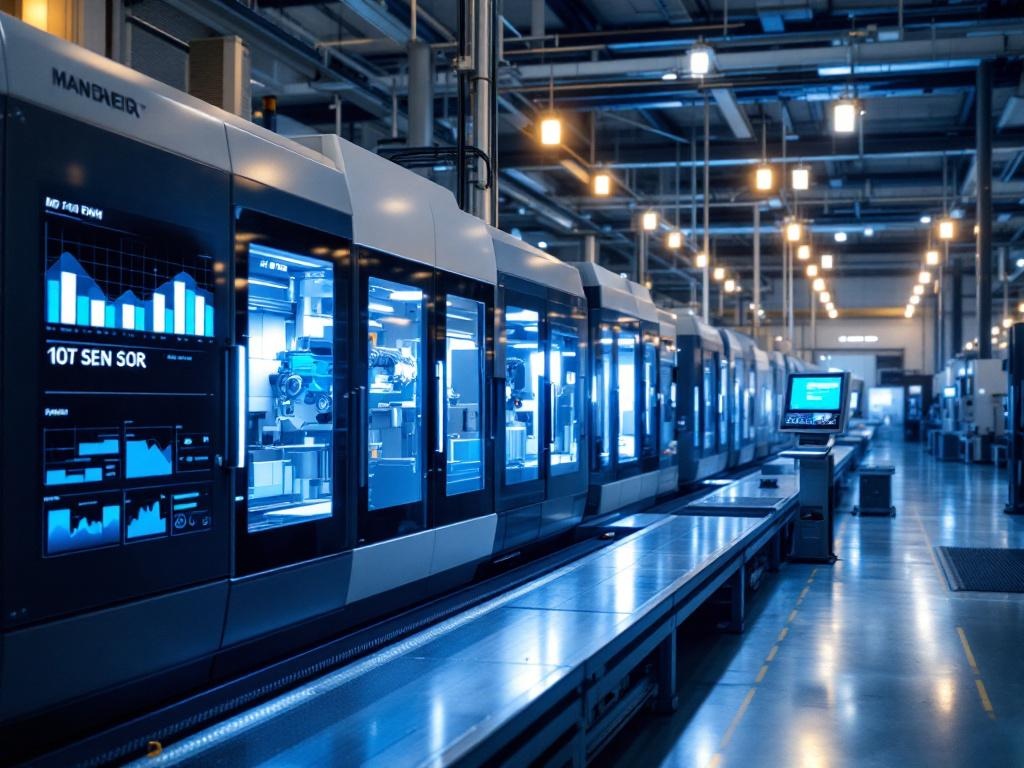
Digital manufacturing is transforming precision machining and metal fabrication across industries by creating unprecedented opportunities for efficiency and innovation. Leaders have demonstrated that strategic implementation requires more than just purchasing new equipment—it demands a comprehensive framework to guide transformation efforts.
Technology Roadmap Development
Your technology roadmap must align with specific business outcomes rather than chasing the latest innovations. Start by auditing your current machining capabilities and identifying critical gaps between your operations and industry benchmarks.
In scaled operations, effective roadmapping follows these phases:
- Assessment of current digital maturity across CNC operations
- Prioritization of technologies based on ROI potential
- Sequencing implementations to minimize production disruption
- Creating feedback loops to validate technology performance
Industry 4.0 adoption isn’t a one-time event but an evolutionary journey. CT Products exemplifies this approach by strategically implementing digital technologies in phases that build upon each other. When developing your roadmap, consider how each technology can enhance your digital transformation strategy while maintaining production continuity.
ROI Calculation and Investment Strategies
The financial case for digital manufacturing investments must go beyond traditional ROI metrics. In budget-controlled teams, capturing both direct and indirect benefits provides a complete picture:
- Direct cost savings: Reduced setup times, material waste, and energy consumption
- Productivity gains: Higher throughput, increased machine utilization
- Quality improvements: Decreased rework and warranty claims
- Revenue opportunities: New capabilities enabling higher-margin work
A critical consideration often overlooked is the cost of delayed digital adoption. Each month without key digital capabilities represents lost competitive advantage that compounds over time. When evaluating precision machining technology investments, factor in the customer retention value of improved quality and faster turnaround times.
Workforce Reskilling and Change Management
The human element remains the most challenging aspect of digital manufacturing implementation. Your workforce needs not only technical training but a fundamental shift in mindset toward data-driven operations.
Effective workforce development includes:
- Hybrid skills development combining traditional machining knowledge with digital literacy
- Cross-functional teams that blend IT and OT expertise
- Leadership development focused on digital change management
- Creating internal digital champions who can demonstrate value to peers
The most successful implementations leverage machine learning to augment human expertise rather than replace it. CT Products demonstrates this principle by pairing experienced machinists with advanced hybrid machine platform technologies to achieve results neither could accomplish alone.
What matters most here: Successful digital manufacturing transformation requires balancing technology investment with workforce development and organizational change management—all guided by a clear roadmap tied to measurable business outcomes.